
Gat No. 129, Near SM Mart, Ganesh Nagar, Talawade, Pune - 411062, Maharashtra, India
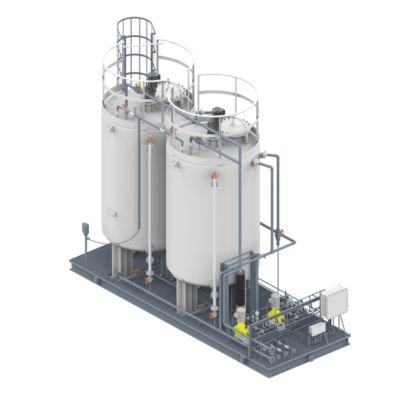
Ultraweld Coat is a Chemical Injection Skids Manufacturer in Malaysia, delivering custom dosing systems for offshore, petrochemical and water treatment service. Skids are built at our works in Pune, India and shipped to Peninsular and East Malaysia.
Most Malaysian oil and gas is produced offshore, much of it from unmanned platforms, and the deepwater fields off Sabah bring low seabed temperatures that cause wax and hydrate blockages. Skids there inject wax and hydrate inhibitors alongside corrosion and scale inhibitors, in a compact package that tolerates salt spray and tropical humidity. Onshore, the petrochemical centres and water treatment plants dose process and treatment chemicals in the same demanding climate.
Chemical Injection Skids are essential process packages used to accurately inject chemicals into pipelines, process systems, and production facilities. These systems help control corrosion, prevent scale formation, improve flow assurance, maintain product quality, and optimize process efficiency. Designed as compact, skid-mounted units, chemical injection skids are widely used in oil & gas, petrochemical, power generation, water treatment, offshore, and chemical processing industries.
As a trusted Chemical Injection Skids Manufacturer in Malaysia, we design, manufacture, and supply customized chemical dosing systems that comply with international standards such as API, ASME, IECEx, ATEX, ISO, and NACE. Our skid-mounted packages are engineered for high accuracy, reliable performance, and long service life, even in the most demanding industrial environments.
Our chemical injection skids are widely used in:
We supply Chemical Injection Skids across Kuala Lumpur, Selangor, Johor Bahru, Penang, Kuantan, Malacca, Ipoh, Kuching, Bintulu, and other industrial regions in Malaysia. Our systems are trusted by oil & gas operators, EPC contractors, petrochemical companies, power plants, water treatment facilities, offshore operators, and industrial processing plants.
Cold seabed temperatures let hydrates and wax form and block flowlines. Inhibitor injected at the wellhead prevents the blockage.
They are compact, corrosion resistant and reliable, with standby pumps, large enough tanks between supply visits, and signals that can be monitored remotely.
 Get Free Quote