
Gat No. 129, Near SM Mart, Ganesh Nagar, Talawade, Pune - 411062, Maharashtra, India
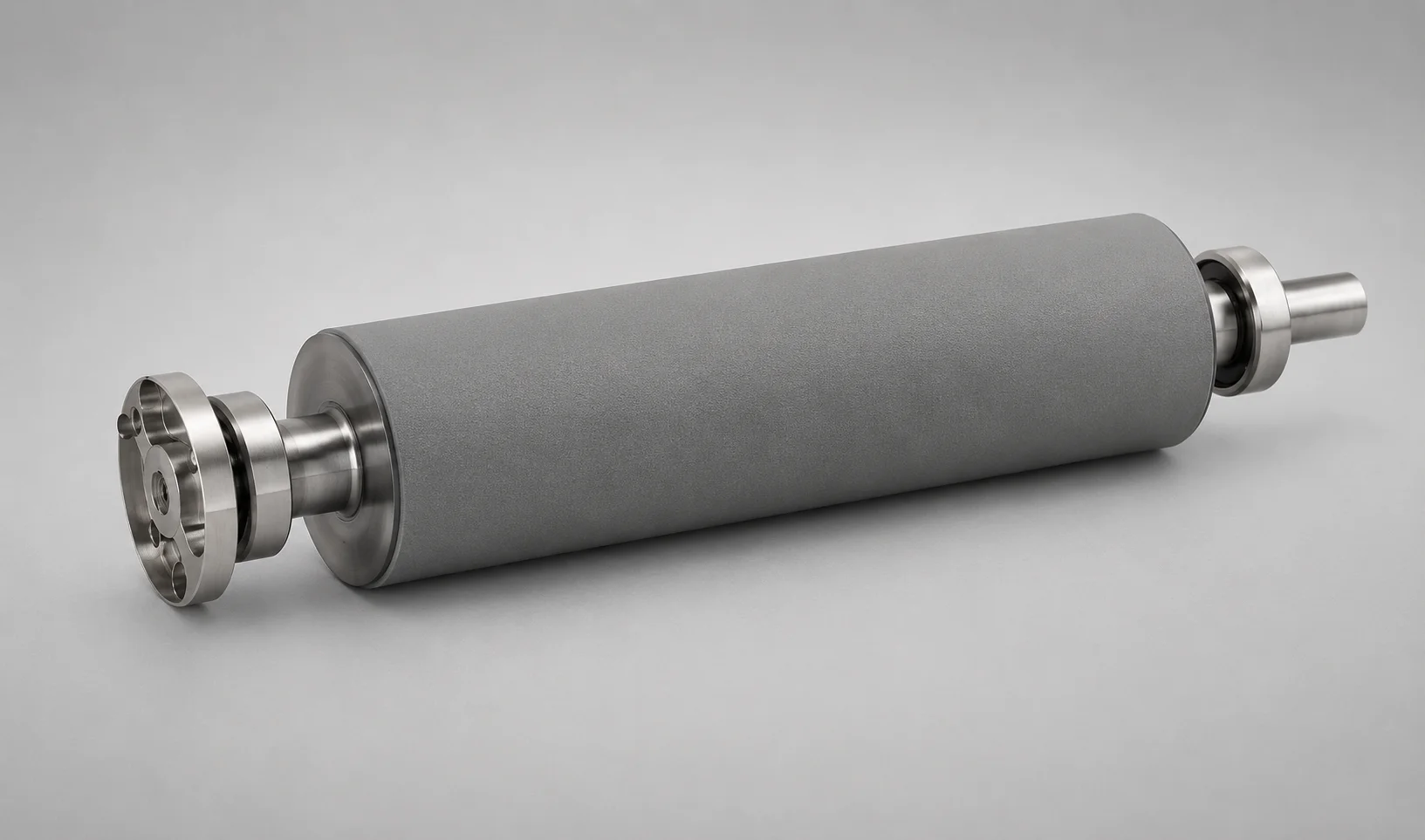
Ceramic coating is a thermally sprayed layer of oxide ceramic, such as chrome oxide or aluminium oxide, applied to a metal part to give it a hard, wear-resistant, chemically inert and electrically insulating surface. Ultraweld Coat applies and finishes ceramic coatings in Pune for sleeves, rollers and seal areas.
One of the well-known Ceramic Coatings Service Providers in Pune is Ultraweld Coat. We tailor our services to meet the needs of our clients. As a leading Ceramic Coatings Service Providers, we are offering you ceramic coated rollers of superior quality, suitable for a range of industrial applications.
This device has a ceramic coating on it, making it more suitable for lowering large weights. The quality of our products has been improved. crafted to order in accordance with client requirements. Find the best Ceramic Coatings Services, at Ultraweld Coat Pvt. Ltd. in Pune.
The smooth surface of ceramic coatings reduces friction, which can improve the efficiency and performance of machinery.
These coatings are resistant to a wide range of chemicals, protecting equipment from chemical damage and corrosion.
They can withstand extreme temperatures without degrading, making them ideal for high-heat applications.
Industrial ceramic coatings are layers of oxide ceramic, such as chrome oxide, aluminium oxide or alumina titania, applied to a metal part by thermal spraying. The ceramic is melted in the spray stream and builds up on the prepared surface as a hard, chemically inert layer that also insulates electrically. The part itself stays cool during spraying, so it does not distort.
| Material | Best at | Keep in mind |
|---|---|---|
| Chrome oxide | Sliding wear, corrosion resistance and low friction against seals and packing | Not suited to sharp thermal shock |
| Aluminium oxide | Electrical insulation combined with wear resistance | More brittle than alumina titania |
| Alumina titania | Toughness and a fine surface finish for thread and wire guides | Lower electrical resistance than pure alumina |
Ceramic coatings are the usual choice for sliding wear, chemical resistance, electrical insulation and low friction. Where a part also faces impact, particle erosion or heavy loads, a carbide coating applied by HVOF is tougher and better bonded. Tell us the wear mechanism and operating conditions and we will suggest the suitable route.
The thickness of a ceramic coating is set by the application. Thermally sprayed ceramic layers are typically a fraction of a millimetre thick after grinding. Thicker is not always better: a thin, well-bonded layer resists cracking from thermal expansion better than a heavy build-up.
Most engineering metals can be ceramic coated, including carbon steel, alloy steel, stainless steel and aluminium alloys. The surface is cleaned and grit blasted first so the coating keys to it, and a metallic bond coat is used where the application needs extra adhesion.
Yes. Oxide ceramics such as aluminium oxide and chrome oxide remain stable at high temperature. In practice the limit is usually set by the base metal and bond coat, and by the difference in thermal expansion between metal and ceramic, which can crack the coating under rapid temperature changes.
Last updated:
 Get Free Quote