
Gat No. 129, Near SM Mart, Ganesh Nagar, Talawade, Pune - 411062, Maharashtra, India
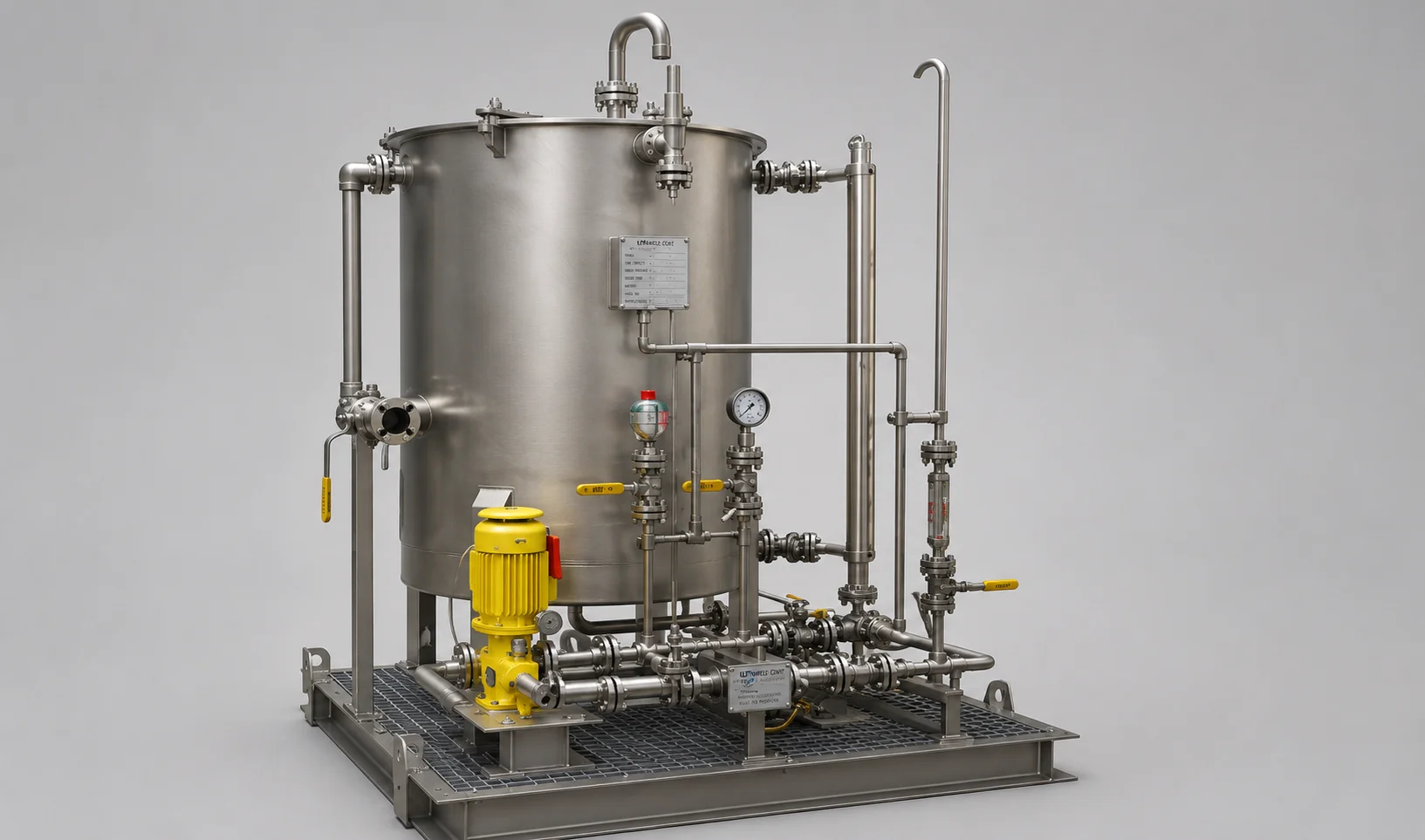
A corrosion inhibitor injection skid is a chemical dosing unit that continuously injects a small, controlled quantity of corrosion inhibitor into a pipeline or process stream, so that a protective film forms on the steel. Ultraweld Coat builds these skids in Pune for oil and gas, petrochemical and water treatment service.
As a leading Corrosion Inhibitor Injection Skids Manufacturer in Pune, at Ultraweld Coat our corrosion inhibitor injection skids are specialized systems designed to inject corrosion-inhibiting chemicals into process streams to protect equipment and infrastructure from the damaging effects of corrosion. These skids are essential in maintaining the integrity and longevity of assets in various industrial applications.
Applications : As a top Corrosion Inhibitor Injection Skids suppliers in Pune , our corrosion inhibitor injection skids are widely used in industries such as oil and gas, petrochemical, power generation, and water treatment. They play a crucial role in processes where equipment is exposed to corrosive environments, such as pipelines, refineries, cooling towers, and boilers.
Safety features and reliable construction protect workers and equipment.
Proper management and dosing of chemicals help minimize environmental impact.
Features such as leak detection, pressure relief valves, and automated shutdown systems to enhance operational safety.
Designed for ease of maintenance and operation, with accessible components and clear system layouts.
Most oilfield corrosion inhibitors are film formers. Dosed into the stream in small, steady quantities, they lay down a thin protective film on the pipe wall that keeps water and acid gases away from the steel. The film wears off, so it must be continually renewed, which is the job of the injection skid.
| Continuous injection | Batch treatment | |
|---|---|---|
| How it works | A metering pump doses a few parts per million into the flow all the time | A large slug of inhibitor is pushed through the line at intervals |
| Suits | Flowlines, gathering systems and process plant | Lines where continuous injection is impractical |
| Skid requirement | Accurate low-flow metering and a reliable standby pump | Larger pump capacity for short periods |
The dose is set against the flow rate and water content of the line. Too little leaves the steel unprotected; too much wastes chemical and can cause emulsion problems downstream. A calibration pot on the skid confirms what the pump is actually delivering.
Injection is only half of a corrosion programme. Corrosion coupons and probes installed through high pressure access fittings show whether the inhibitor is doing its job, and the dose is adjusted from those readings.
A corrosion inhibitor injection skid is a modular dosing unit that continuously injects a small, measured quantity of corrosion inhibitor into a pipeline or process stream. The inhibitor forms a protective film on the steel, which protects pipes, vessels and equipment from corrosive fluids.
Corrosion inhibitor injection skids are used in oil and gas production, pipelines, refineries and petrochemical plants, power generation and water treatment: anywhere carbon steel equipment carries water, acid gases or other corrosive fluids and needs continuous chemical protection.
The main components are a chemical storage tank, metering pumps, a calibration pot, flow and pressure instruments, isolation, relief and back-pressure valves, a control panel, and safety features such as leak containment. The inhibitor reaches the line through an injection quill at the injection point.
The skid’s metering pumps draw corrosion inhibitor from the tank and deliver it at a set rate, matched to the flow in the line, through an injection quill into the process stream. The control system monitors the injection and raises an alarm if the rate drifts from the set point.
Yes. Corrosion inhibitor injection skids are built to the project: the flow rate, injection pressure, number of injection points, type of inhibitor, tank capacity, materials and hazardous area rating are all specified, so the skid is compatible with both the process and the site.
Last updated:
 Get Free Quote