
Gat No. 129, Near SM Mart, Ganesh Nagar, Talawade, Pune - 411062, Maharashtra, India
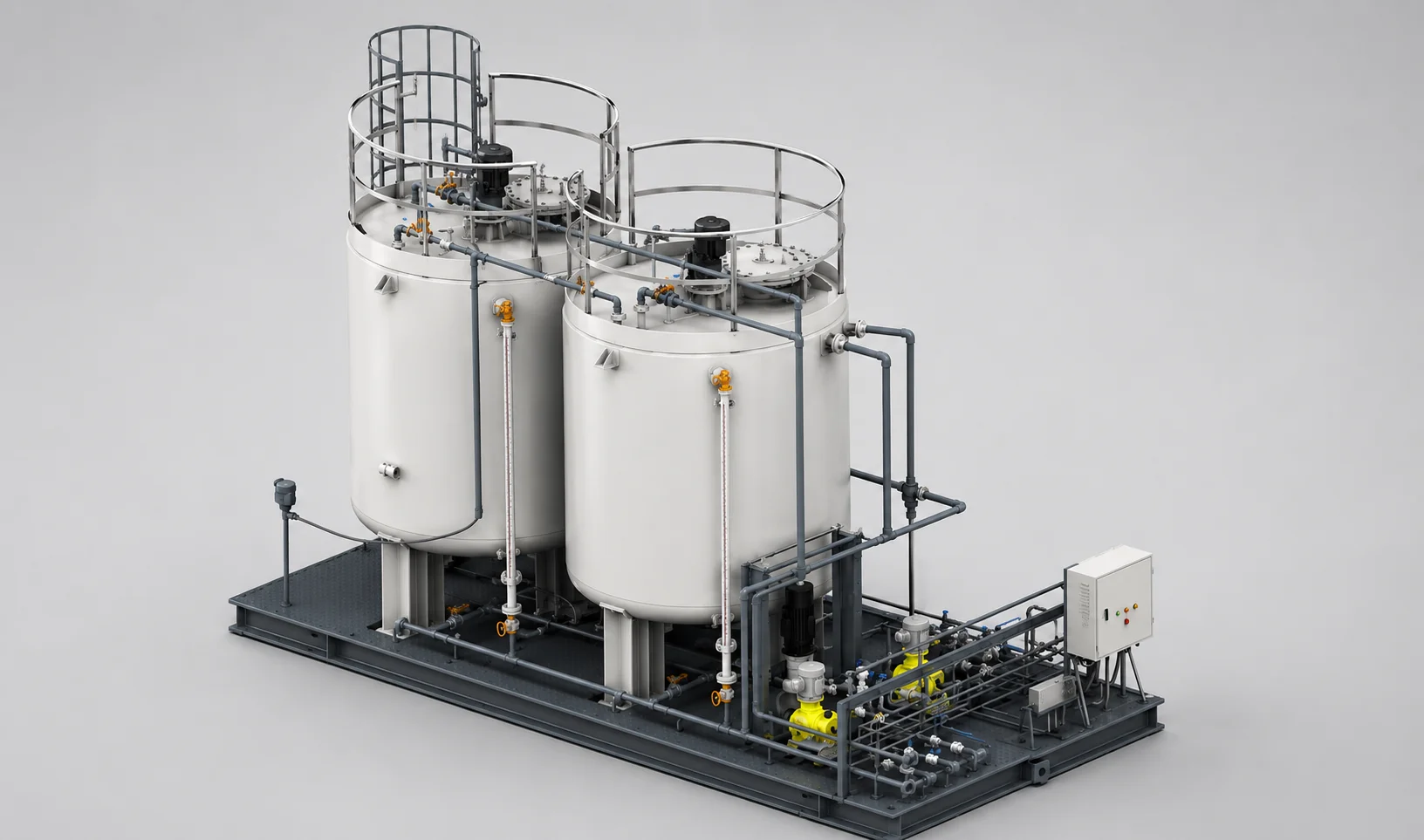
A chemical injection skid is a self-contained unit of tank, metering pumps, valves and instruments, mounted on one frame, that doses a precise quantity of chemical into a process line. Ultraweld Coat designs and builds chemical injection skids in Pune for oil and gas, petrochemical, water treatment and power plants.
As a leading Chemical Injection Skids Manufacturer in Pune, at Ultraweld Coat, our chemical injection skids are engineered systems designed for precise and efficient injection of chemicals into process streams in various industrial applications. As a top Chemical Injection Skids Manufacturer in Pune, these skids ensure accurate dosing, mixing, and delivery of chemicals, optimizing process performance and maintaining the integrity of the equipment and products.
Applications : As a leading Chemical Injection Skids suppliers in Pune , our chemical injection skids are widely used in industries such as oil and gas, petrochemical, water treatment, pharmaceuticals, and power generation. They are essential for processes like corrosion inhibition, scale prevention, pH control, and water treatment, ensuring optimal performance and compliance with industry standards.
Equipped with advanced metering pumps and control systems to ensure highly accurate dosing rates.
Built with high-quality materials to withstand harsh industrial and offshore environments.
Features such as leak detection, pressure relief valves, and automated shutdown systems to enhance operational safety.
Designed for ease of maintenance and operation, with accessible components and clear system layouts.
| Component | What it does |
|---|---|
| Chemical tank | Stores the chemical, with level indication and a vent |
| Metering pumps | Deliver a set, repeatable flow; usually one duty and one standby |
| Calibration pot | Lets the operator check the actual pump delivery |
| Pulsation dampener | Smooths the pulsing flow from a reciprocating pump |
| Relief and back-pressure valves | Protect the pump and pipework and keep the dosing stable |
| Instruments and control panel | Show pressure, flow and level, and start, stop and alarm the system |
| Injection quill | Releases the chemical into the middle of the process stream |
Corrosion inhibitors, scale inhibitors, demulsifiers, biocides, oxygen scavengers, antifoam, and methanol or glycol for hydrate control. Each has its own compatibility requirements, so the wetted materials, seals and pump type are chosen for the chemical. See also our corrosion inhibitor injection skids and well servicing and acidizing skids.
The chemical reaches the line through an injection quill fitted in a high pressure access fitting, which allows the quill to be removed and replaced without shutting the line down.
Chemical injection skids are pre-assembled, modular systems designed to accurately dose and inject chemicals into various process streams in industrial applications. They are used to enhance process performance, protect equipment, and ensure product quality.
Chemical injection skids are commonly used in the oil and gas, petrochemical, water treatment, pharmaceuticals, and power generation industries. They are essential for processes like corrosion inhibition, scale prevention, pH control, and water treatment.
A chemical injection skid has a chemical storage tank, metering pumps (usually one duty and one standby), a calibration pot to check delivery, pulsation dampeners, relief and back-pressure valves, strainers, pressure and level instruments, and a control panel, all piped and wired on a single steel frame.
Each chemical injection skid is designed for its duty. The chemical and its concentration, the injection rate and pressure, the number of injection points, the hazardous area classification, the utilities available and the space on site decide the pump type, tank size, materials and control arrangement.
The wetted parts of a chemical injection skid are chosen for compatibility with the chemical. Stainless steel 316 is the common choice for tanks, tubing and pump heads; higher alloys or lined components are used for aggressive chemicals. The frame is normally coated carbon steel or stainless steel.
Last updated:
 Get Free Quote