
Gat No. 129, Near SM Mart, Ganesh Nagar, Talawade, Pune - 411062, Maharashtra, India
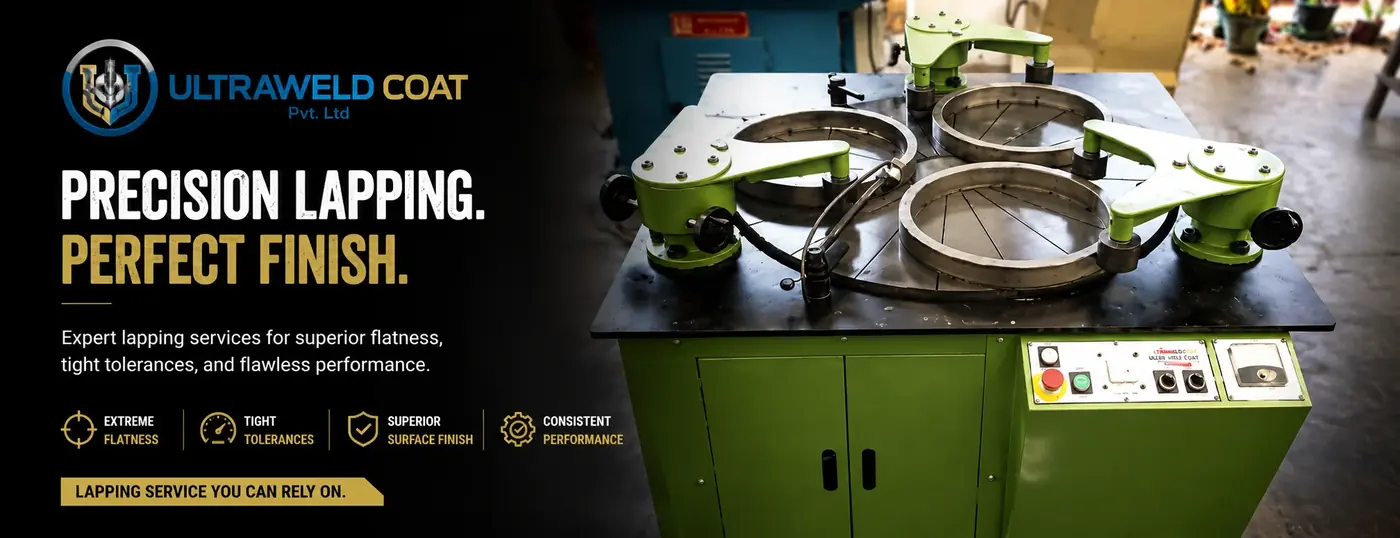
Ultraweld Coat are the best Industrial Lapping Services Provider in Pune. With our lapping services you will find smooth and fine performance in your industrial operation process. Lapping is a precision machining process used to achieve very flat, smooth, and accurate surfaces on a variety of materials. This process involves rubbing two surfaces together with an abrasive in between, which removes material to create a fine finish and tight tolerances.
Lapping services are essential for industries requiring high precision and superior surface finishes. By providing exceptional flatness and smoothness, lapping enhances the performance and reliability of critical components in various applications. Whether for optical components, mechanical seals, or electronic substrates, lapping ensures that the highest standards of precision and quality are met. Find Pune’s best Industrial Lapping Services at Ultraweld Coat Pvt. Ltd.

Gate lapping is a precise finishing process used to enhance the sealing surface of a gate valve, ensuring optimal performance and leak-free operation.

Ball lapping is a finishing process that smooths and polishes the surface of a ball valve, ensuring a precise fit and improved sealing capabilities.
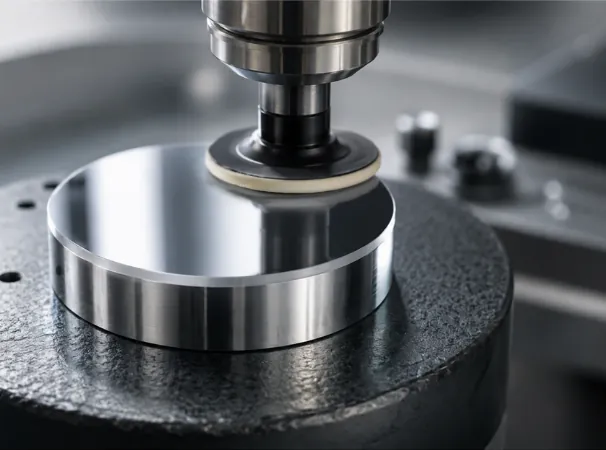
Lapping produces a superior surface finish, often achieving mirror-like smoothness. It is commonly used when a smooth finish is crucial for performance, such as in optical lenses, valve seats, and sealing surfaces.
Lapping is used to achieve high precision and tight tolerances, often in the range of micrometers (µm). This process is ideal for applications requiring extremely flat surfaces and exact dimensions.
Our industrial lapping capabilities deliver flat, polished surfaces that resolve leak challenges and guarantee component wear resistance.
Lapping is used to achieve high precision and tight tolerances, often in the range of micrometers (µm).
This process is ideal for industrial applications requiring extremely flat surfaces.
This process is ideal for applications requiring exact dimensions and tight tolerances.
| Process | How it works | What it gives |
|---|---|---|
| Grinding | A bonded abrasive wheel cuts the surface | Size and form |
| Lapping | Loose abrasive works between the part and a lap | Flatness, and surfaces that match each other |
| Polishing | Fine abrasive on a soft carrier | Low roughness and reflectivity |
Lapping removes very little material. Its value is in the geometry it leaves: two lapped faces touch across their whole area, which is what makes a metal-to-metal seal tight.
The flatness of a lapped face is commonly verified with an optical flat under monochromatic light. The pattern of light bands shows how far the surface departs from flat.
Grinding uses a bonded abrasive wheel to bring a part to size and shape. Lapping follows it, using loose abrasive between the part and a lap, to make the surface truly flat and to match it to its mating part. Grinding sets the dimensions; lapping makes the seal.
Yes. Tungsten carbide and ceramic coatings are too hard for conventional abrasives, so they are lapped with diamond. Lapping is the normal final step for coated valve balls, seats and gates, because it gives the flat, matched surfaces that a metal-to-metal seal needs.
A valve ball and its seats are lapped together because a metal-to-metal seal depends on the two surfaces matching each other across the whole contact band. Lapping them as a pair removes the small differences in form that would otherwise leave a leak path.
Last updated: