
Gat No. 129, Near SM Mart, Ganesh Nagar, Talawade, Pune - 411062, Maharashtra, India
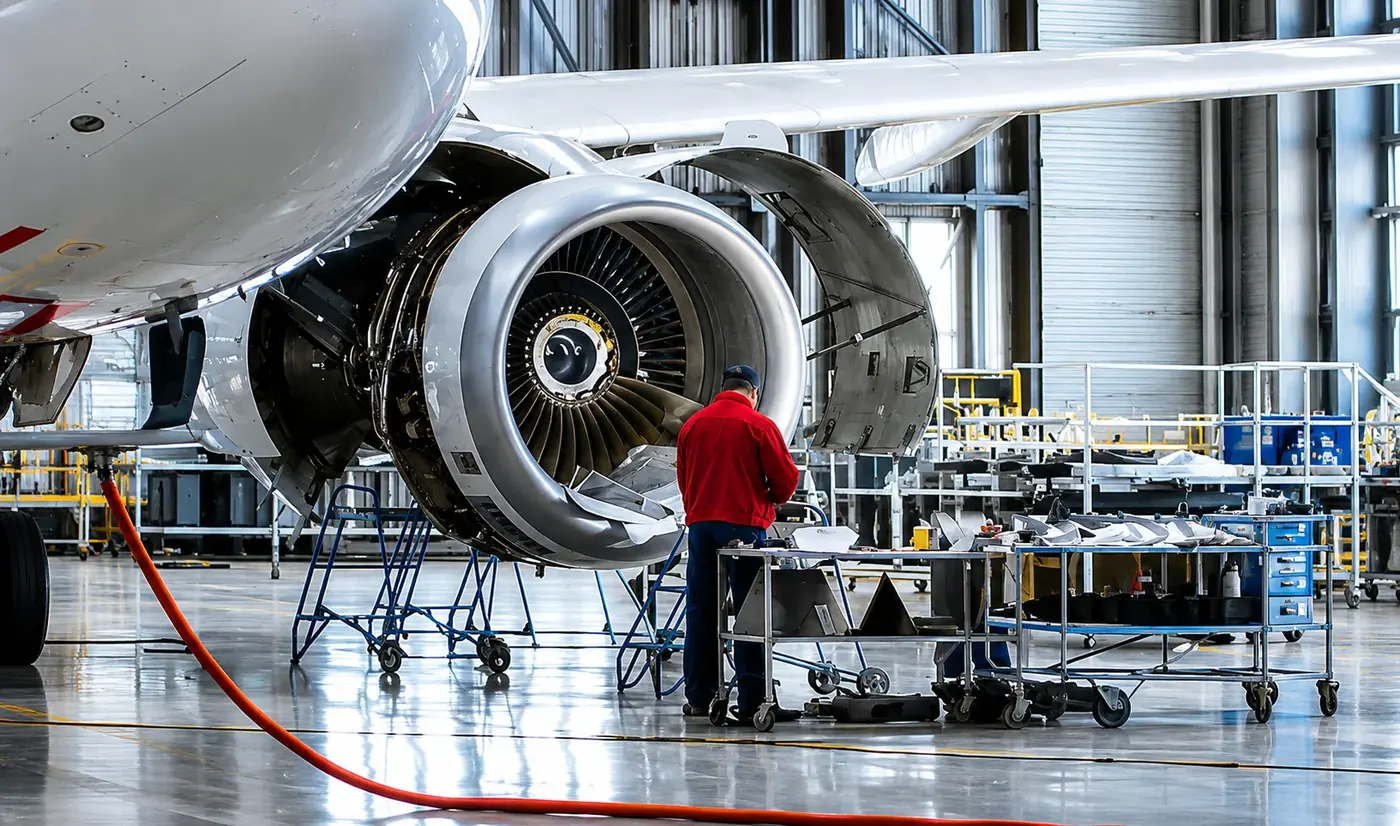
Aerospace coatings are thermal spray layers applied to aircraft components to resist wear, heat and corrosion. Ultraweld Coat applies HVOF tungsten carbide, thermal barrier and ceramic coatings to parts such as landing gear, actuator shafts and turbine components, and grinds them to final size.
Given its complicated operating capabilities, the aerospace industry is one of the largest and most promising, requiring rapid technical improvement. Because these systems demand high performance and quality criteria, thermal spray coating is naturally needed in many applications, from landing gears to airframes and propulsion systems.
On various components that are exposed to challenging operating conditions, various coatings, such as ceramic, metal, cermet, and composites, are sprayed. Because these coatings are naturally able to withstand harsh operating conditions, they not only improve longevity but also reliability. For all parties involved in the supply chain, safety is a need in the aerospace industry and is not an option. Due to rising demand, the aerospace sector has grown significantly over the last two decades and offers enormous potential going forward.
HVOF tungsten carbide coatings replace hard chrome on landing gear cylinders and actuators, providing superior wear, corrosion, and fatigue resistance for flight-critical components.
Thermal barrier coatings (TBC) and MCrAlY bond coats protect turbine blades, combustion chambers, and hot section components from extreme heat and high-temperature oxidation.
Ceramic and composite coatings applied to airframe structural parts for dimensional restoration, erosion protection, and extended service life in harsh atmospheric environments.
Precision ground and coated actuator shafts with superior corrosion and sliding wear resistance, meeting the tight tolerances and stringent quality standards required for flight-critical actuation systems.
| Coating | Purpose | Typical components |
|---|---|---|
| HVOF tungsten carbide | Wear and corrosion resistance; alternative to hard chrome plating | Landing gear cylinders, actuator rods |
| Thermal barrier coating over an MCrAlY bond coat | Insulates metal from combustion heat and resists oxidation | Turbine blades, combustion chambers |
| Chromium carbide nickel chrome | Wear resistance at high temperature | Hot-section seals and sliding surfaces |
| Ceramic coatings | Wear resistance and electrical insulation | Airframe and accessory components |
Hard chrome plating uses hexavalent chromium, which is tightly regulated because of its health and environmental hazards. HVOF tungsten carbide coatings have become the established alternative on landing gear and actuators: they are harder, wear more slowly and, unlike plating, do not reduce the fatigue strength of the part through hydrogen embrittlement.
Tell us the specification your component must meet and we will confirm what we can offer against it.
Landing gear cylinders, pistons and axles are commonly coated with HVOF tungsten carbide, which has largely replaced hard chrome plating on these parts. The coating is ground to a fine finish so that the seals run on a hard, smooth, corrosion-resistant surface.
Hard chrome plating uses hexavalent chromium, which is tightly regulated for health and environmental reasons. HVOF tungsten carbide is harder, wears more slowly and does not cause the hydrogen embrittlement that plating can, so it has become the established alternative on landing gear and actuators.
A thermal barrier coating is a ceramic layer sprayed over a metallic MCrAlY bond coat on parts in the hot section of an engine, such as turbine blades and combustion chambers. The ceramic insulates the metal from combustion heat, and the bond coat resists oxidation.
Many can. A worn surface is built back up with a sprayed coating and ground to the original dimension, which is often more economical than a new part. Any repair has to follow the specification and approvals that apply to that component.
The component drawing, the base material, the coating and process specification that applies, the areas to be coated and masked, and the finish and tolerance required. Tell us the specification first and we will confirm what we can offer against it.
Last updated:
 Get Free Quote